Therapy for women, in the form that fits the moment you're in — weekly sessions, group work, or focused intensives. Every path begins the same way: with a free 20-minute call.
In-person office in the SF Bay Area · Virtual across California
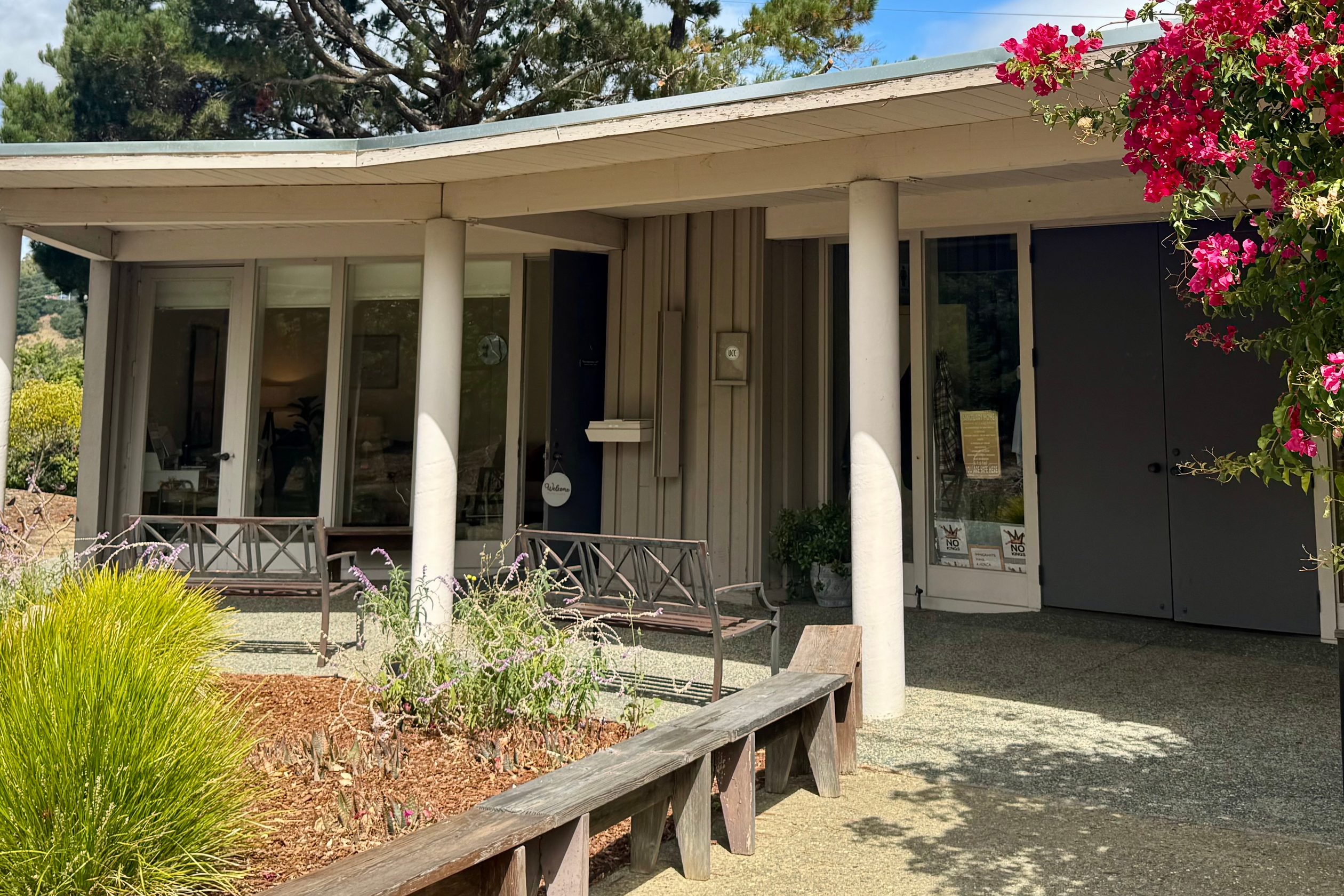
Waiting room.
Services
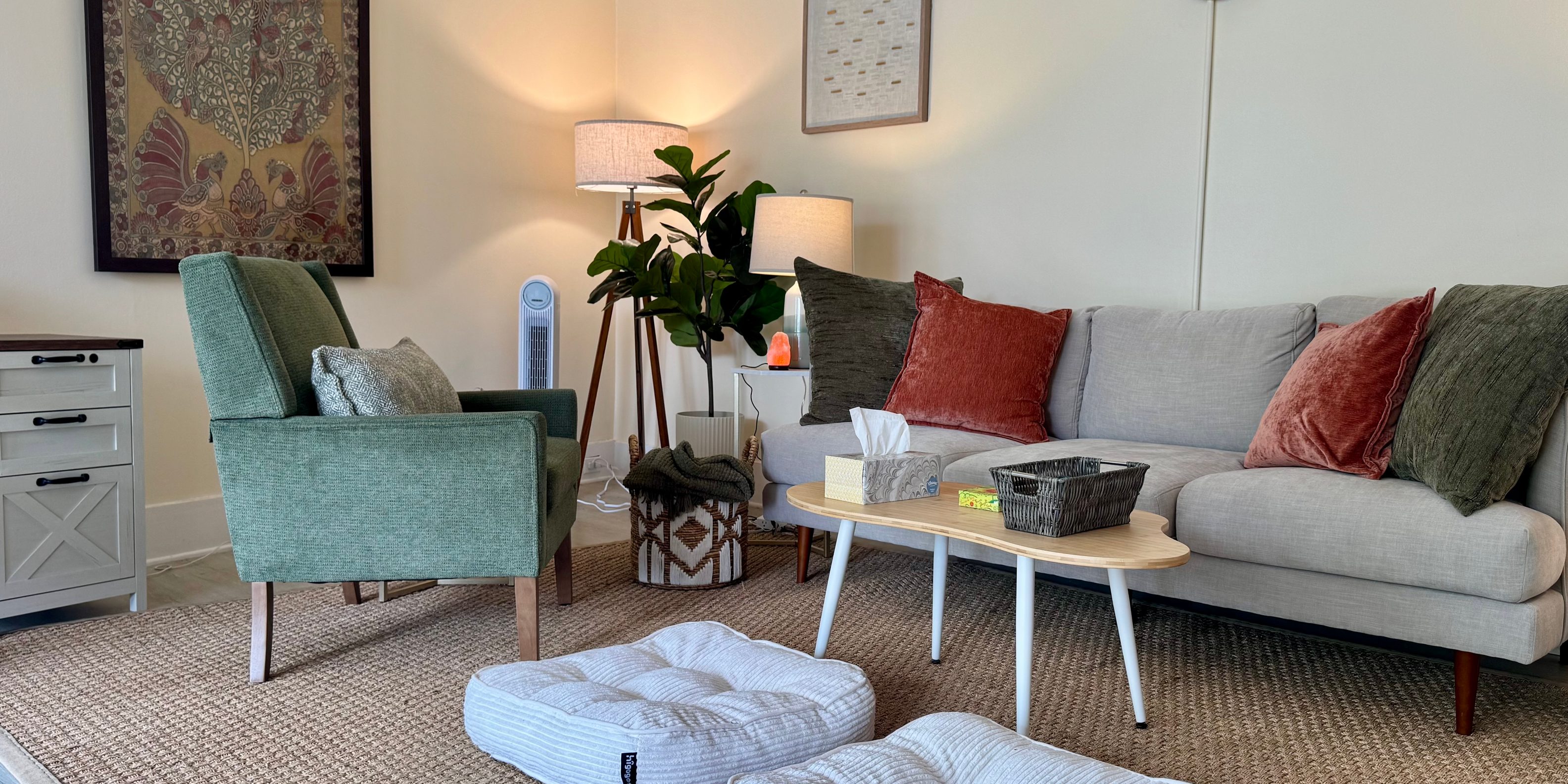
The therapy room.
i. Individual Therapy
Therapy can be a place to talk, but I believe it should also be a place where things begin to change.
I have been providing individual therapy for more than 15 years, and over that time my approach has continued to evolve. I believe deeply in having a space where you feel safe, understood, and supported, while also recognizing that insight and conversation alone may not always be enough to shift patterns that have been with us for years.
Individual therapy at Survive 2 Thrive is therefore both relational and intentional. I take the time to understand not only what is happening in your life today, but also the experiences, relationships, nervous-system responses, and protective patterns that may be contributing to what you are struggling with.
Depending on your needs, therapy may include traditional talk therapy alongside experiential and trauma-focused approaches such as Brainspotting, IFS-informed parts work, somatic and nervous-system-based interventions, and my House of Healing™ framework. Rather than using the same approach with every person, I thoughtfully tailor treatment to you, your history, your identities, your culture, and what you hope to change.
At the heart of this work is the therapeutic relationship. Research and experience have repeatedly shown how important it is to feel safe and connected with your therapist. Creating a relationship in which you feel seen, respected, and able to bring your full self into the room is foundational to everything we do together.
Therapy with a Direction
I also don’t believe that everyone needs to be in therapy forever.
For some people, ongoing therapy is an important and meaningful source of support, and there are seasons of life when longer-term therapy may be exactly what is needed. For others, therapy can be a more focused chapter: a place to understand what is happening, work through what is keeping you stuck, develop new ways of relating to yourself and others, and eventually carry that work into your life outside the therapy room.
Throughout our work together, we will regularly revisit your goals and talk openly about your progress. And when you reach a place where therapy is no longer serving the same purpose, ending therapy can itself be part of the work—a thoughtful transition that recognizes how far you have come and supports you in trusting your own capacity to move forward.
Individual therapy sessions are typically 50 minutes and may be scheduled weekly or bi-weekly, depending on your needs and treatment plan.
In-person or virtual Clients located in California
Sometimes weekly therapy can feel like there simply isn’t enough time to go deeper into the core issues.
Therapy intensives offer a longer, dedicated space for deeper therapeutic work. Instead of beginning and ending within a traditional 50-minute session, an intensive gives us more uninterrupted time to slow down, explore what may be underneath longstanding patterns or symptoms, and work with experiences that may need more space to process.
Intensives may be especially helpful if you are working through a specific traumatic experience, feeling stuck around an issue despite previous therapy, or wanting to focus more deeply on a particular area of healing.
Before an intensive, we will spend time understanding what brings you in, what you hope to work through, and whether an intensive is appropriate for your needs. Together, we will develop a personalized plan for the work.
What does an intensive look like?
There is no single way an intensive needs to unfold. Depending on your needs, readiness, and goals, we may integrate several approaches to help you access and process your experiences at a deeper level.
This may include Brainspotting, IFS-informed parts work, and psycholytic ketamine-assisted psychotherapy (KAP) when clinically appropriate. Ketamine is prescribed and medically managed by a separate qualified medical provider following appropriate screening and clearance.
We may also use my House of Healing™ framework to help us understand how experiences from your past continue to shape your present-day relationships, emotions, nervous system, and protective patterns. Together, we can identify the rooms of your “house” that may need attention and use the intensive as a focused space to begin working with what we find there.
The goal is not to rush the healing process. Rather, the extended format allows us to stay with the work for longer—without having to stop just as something important begins to emerge—and gives your nervous system the time and space it may need for deeper processing and integration.
Intensives are typically 2–3 hours per session and may be offered as a single extended session or across 2–3 consecutive days, depending on your goals and individualized treatment plan.
Fee: $300 per hour Packages available for predetermined lengths of intensives Typically offered in person
Group therapy offers something individual therapy cannot always provide: the opportunity to heal in relationship and in community with others who understand something about what you have been through.
For many women, difficult experiences—particularly trauma—can leave us feeling isolated, different, or as though we are the only ones struggling in the ways that we do. Being in a thoughtfully facilitated group can help reduce that isolation. There can be something deeply powerful about hearing someone else put words to an experience you thought was yours alone.
At Survive 2 Thrive, groups are designed to offer a safe, supportive, and intentional space for women to connect, learn from one another, and engage in deeper therapeutic work. While each group has its own focus, they may incorporate psychoeducation, facilitated discussion, experiential exercises, nervous-system regulation, parts work, and opportunities for reflection and connection.
I have been facilitating different types of groups in therapeutic settings since 2017. The healing that can happen in a group setting sometimes far exceeds what we can achieve in individual sessions. Participants often tell me that one of the most meaningful parts of group therapy is the sense of community that develops along the way. For some, those feelings of connection and belonging extend well beyond the group itself.
Most therapy groups meet weekly for a defined period of time, typically 8 weeks. Group therapy can also provide a more affordable way to access meaningful therapeutic support.
Fee: $75 per session (sliding scale options available) In-person or virtual, depending on the group
Psycholytic ketamine-assisted psychotherapy (KAP) combines low-dose ketamine with trauma-informed therapy — creating conditions where healing, self-compassion, and new perspectives may become more accessible. Offered within a relational framework that honors your pace.
Women’s Healing Circle: A Therapy Group for Women Healing from Complex Trauma
An 8-week therapy group for women who have experienced childhood, relational, or other ongoing trauma and are living with its lasting effects. No formal diagnosis is needed. Together we explore how the past shows up in emotions, relationships, body, and nervous system today, and make room for connection with other women who share similar experiences. In person in the SF Bay Area, for California residents; the exact location is shared at intake. To ask about joining, email taggarwal@survive2thrivetherapy.com or call 650-383-0120.
Group Therapy: $75 per session (sliding scale options available). Most therapy groups run for approximately 8 sessions over 8 continuous weeks. Specific fees and schedules will be provided when each group is announced.
Therapy Intensives: $300 per hour. Intensives offer extended time for deeper, focused therapeutic work and are tailored to each client’s needs. A typical intensive may involve 2–3 hour sessions over 2–3 consecutive days. Fees and the recommended length of an intensive will always be discussed and agreed upon in advance.
Do you offer a sliding scale?
I maintain a limited number of reduced-fee spaces for clients who may not otherwise be able to access therapy. Availability varies, so please feel free to ask about current openings during your consultation.
Do you accept insurance?
I am contracted with Kaiser Permanente Northern California through One Life Counseling Center and can provide therapy to eligible Kaiser NorCal members through this partnership.
For other insurance plans, I work as an out-of-network provider. You would pay for sessions directly, and I can provide you with a superbill that you may submit to your insurance company for possible reimbursement.
Out-of-network benefits vary considerably by plan, so I recommend contacting your insurance company directly to ask about your coverage for outpatient psychotherapy with an out-of-network provider.
What kinds of concerns do you work with?
My practice specializes in women’s mental health, with particular depth in three interconnected areas: trauma and complex trauma, relationships and intimacy, and women’s health across the lifespan.
Clients may come to therapy because of childhood or relational trauma, difficult relationship patterns, anxiety, emotional overwhelm, major life transitions, perinatal concerns, or the psychological and emotional changes that can accompany perimenopause and menopause.
You do not need to know exactly what you want to work on before reaching out. We can begin with what is happening in your life now and explore together what may be underneath it.
What kind of therapy do you provide?
My approach to therapy is relational, trauma-informed, and integrative. Depending on your needs, our work may include traditional talk therapy as well as parts work, attachment-focused therapy, Brainspotting, nervous-system and somatic approaches, and other experiential methods.
For some clients, I also offer ketamine-assisted psychotherapy (KAP) when it is clinically appropriate and when ketamine has been prescribed by a qualified medical provider.
Rather than using the same approach with every person, we will shape therapy around your history, your nervous system, your goals, and what feels most supportive to you.
Do you offer in-person or virtual therapy?
Both.
In-person therapy is available at my office on the Peninsula of the SF Bay Area. Virtual therapy is available to clients located anywhere in California.
Some clients choose primarily in-person therapy, others prefer virtual sessions, and some use a combination depending on their needs and schedules.
How do I know if we are a good fit?
Finding the right therapist matters, particularly when you are considering deeper trauma or relationship work.
I offer a complimentary 20-minute consultation so that you can tell me a little about what brings you to therapy, ask questions about how I work, and get a sense of whether working together feels like a good fit.
There is no expectation that you need to make a decision during the consultation.
How often will we meet?
Most clients begin with weekly sessions, which allows us to build continuity and establish a strong therapeutic foundation.
Over time, the frequency of sessions may change depending on your needs, goals, and where you are in the therapeutic process. We can make those decisions together.
How long will I need to be in therapy?
There isn’t a predetermined timeline for therapy.
Some clients come with a specific concern they want support with, while others are looking to understand and heal patterns that have developed over many years or even generations.
We will periodically reflect on how therapy is progressing, what is changing, and what you would like the next phase of the work to look like.
How do I get started?
The first step is to schedule a complimentary 20-minute consultation.
We’ll briefly talk about what brings you to therapy, what you’re hoping for, and whether my approach may be a good fit for you. If we decide to work together, we’ll then schedule your first full session.
Not sure which path fits? Start with a free 20-minute consultation — a quiet, honest conversation about what you're navigating and which form of the work makes sense.